
Sailing blocks may look similar externally, but the way the sheave is supported has a major effect on friction, load capacity and where the block is best used. Plain bearings, ball bearings, roller bearings and specialist high-load designs each have useful applications.
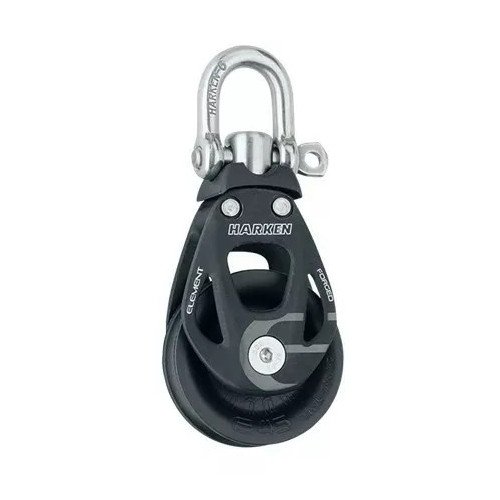
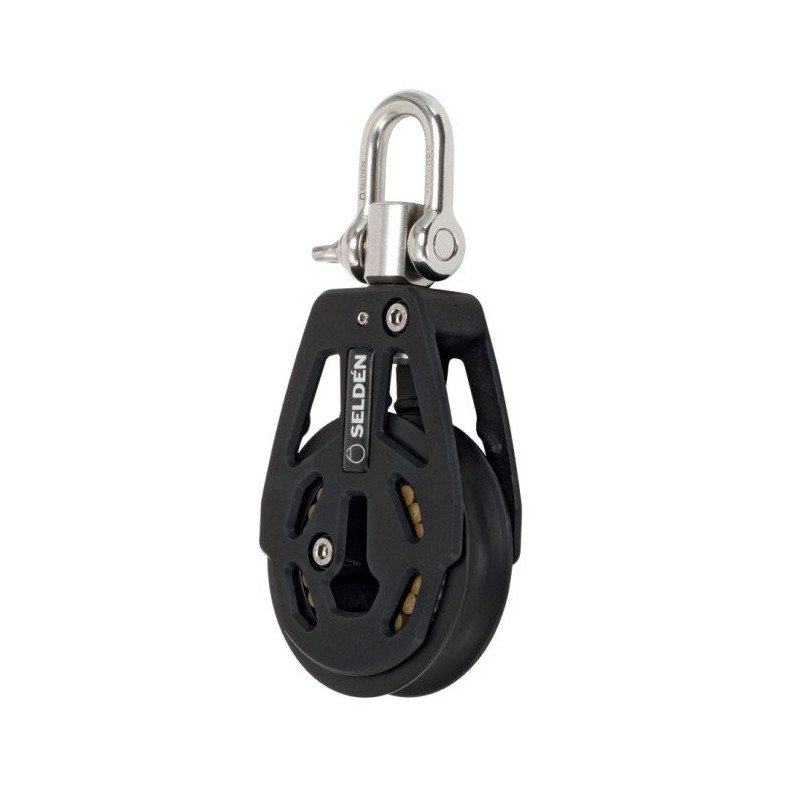
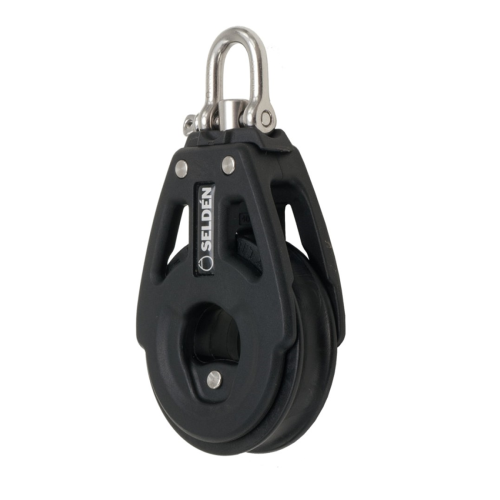
The starting point is not the bearing alone. Always consider rope diameter, expected working load, sheave size, attachment style and how freely the block can align with the line.
Plain-bearing blocks
A plain-bearing block uses a relatively simple bearing arrangement between the sheave and its axle. The design is robust and can be well suited to general-purpose applications where simplicity and strength are more important than achieving the lowest possible friction.
They are widely used for yacht and dinghy control systems and are available in different sheave sizes, single and multiple configurations, cheek blocks, fiddle arrangements and blocks with beckets or cleats.
Browse our plain-bearing blocks.
Ball-bearing blocks
Ball-bearing blocks are designed to reduce friction as the sheave rotates. This makes them particularly useful on control systems that move frequently and where low operating friction improves feel and ease of adjustment.
The correct choice still depends on the manufacturer's load rating. Low friction does not automatically mean that a block is suitable for every high-load application.
Browse our ball-bearing blocks.
Roller-bearing blocks
Roller bearings provide a larger bearing contact area than small balls and can be useful where a block must rotate efficiently while carrying substantial working loads. They are commonly found in highly loaded running-rigging applications.
As with any block, check the safe working load, rope size and attachment rather than selecting purely from the sheave diameter.
Browse our roller-bearing blocks.
High-load blocks
High-load blocks are intended for demanding applications where compact dimensions may need to handle considerable load. Their construction, attachment method and permitted rope size vary by product, so manufacturer data should be checked carefully.
Browse our high-load blocks.
Ratchet blocks
A ratchet block adds resistance to rotation in one direction so the block can help the crew control a loaded sheet while still allowing the line to be eased. They are commonly associated with frequently handled sheets and control lines where additional grip is useful.
Browse our ratchet blocks.
Sheave diameter and rope diameter
The maximum line diameter stated for a block is an important limit, but it is not the only sizing consideration. The rope must run cleanly through the cheeks and around the sheave without excessive rubbing or distortion.
A larger sheave can also reduce the severity of the bend imposed on a rope. The appropriate relationship depends on the rope construction, application and manufacturer guidance.
Working load and breaking load
Safe or maximum working load is the figure to use when deciding whether a block is suitable for normal service. Breaking load is not the normal operating target and should not be treated as the working capacity of the fitting.
Dynamic sailing loads can be substantially different from a simple static pull. Shock loading, changes in lead angle and the geometry of a purchase system all need to be considered.
Read our How to Size a Sailing Block for a more detailed look at these figures.
Attachment and alignment
A strong block can still perform poorly if it is attached in a way that forces it sideways. Swivels, shackles, soft attachments, straps and fixed cheek arrangements all suit different lead directions.
Check that the attachment point itself is suitable for the expected load and that the block can align naturally with the rope wherever movement is intended.
Replacing an existing block
Where possible, record the manufacturer's part number, sheave diameter, maximum rope diameter, attachment type and load rating before ordering a replacement. If an exact replacement is no longer available, those details provide a much better basis for selecting an alternative than external size alone.
Return to our Yacht Deck Hardware Guide for the wider deck-hardware guide.