
Correctly sizing a sailing block means checking the rope, the block and the load together. Sheave diameter is useful, but it should not be used as the only specification.
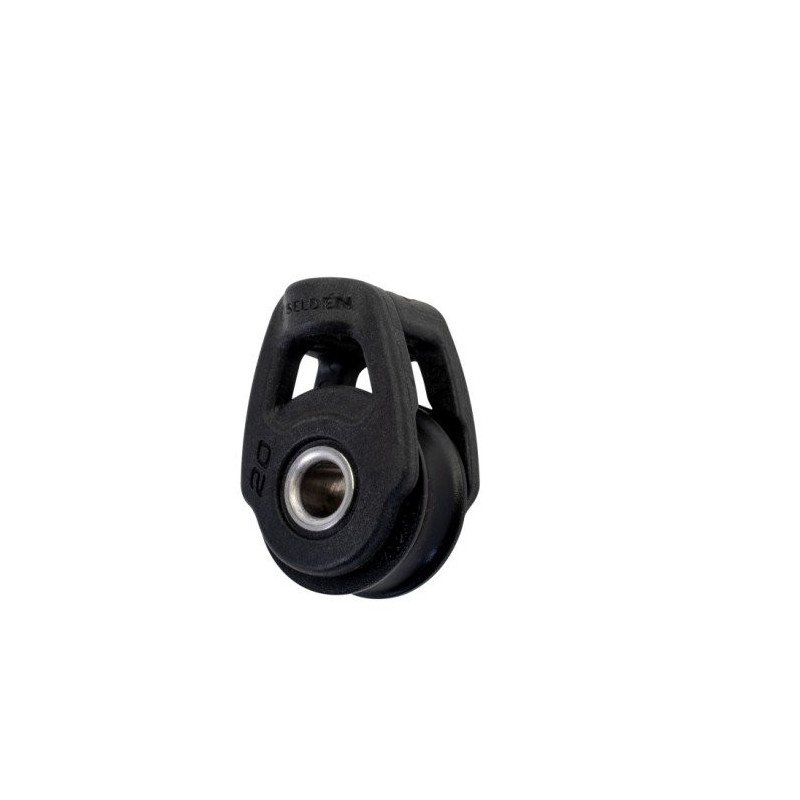
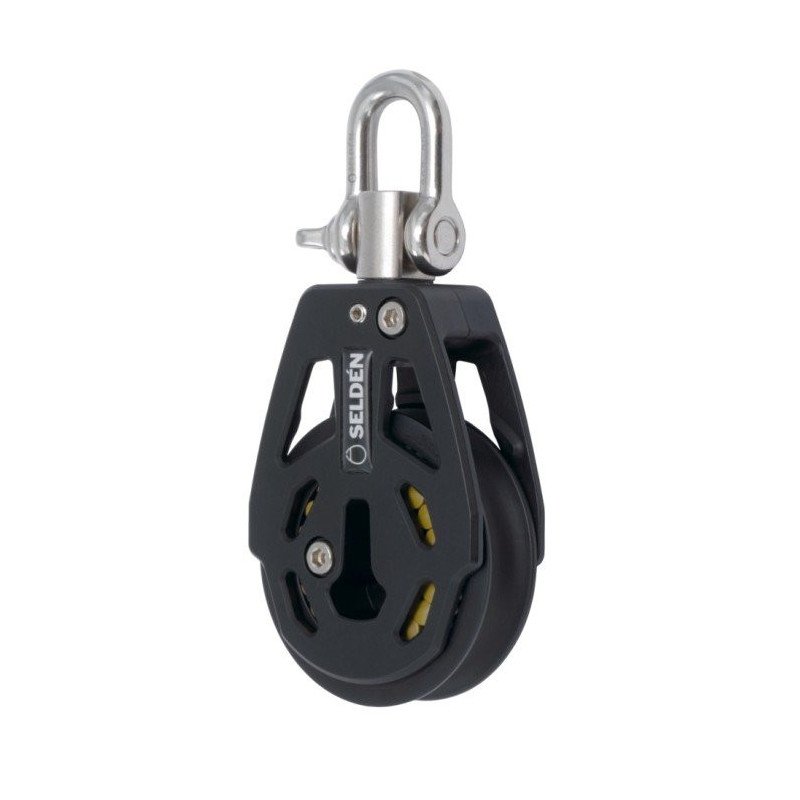

For an existing system, start by identifying the current block and recording its part number where possible. For a new system, work from the rope diameter, expected loads, purchase geometry and attachment arrangement.
1. Check the rope diameter
Every block has a permitted rope-size range or maximum line diameter. The rope needs enough clearance to run through the cheeks and around the sheave without binding.
Do not assume that a larger rope automatically improves a system. It must remain compatible with the blocks, organisers, cleats and clutches through which it passes.
2. Check the sheave diameter
The sheave supports the rope as it changes direction. A larger sheave creates a gentler bend, while a very small sheave can create a tighter bend and additional friction.
The appropriate sheave size depends on the rope construction and application. When replacing an existing block, matching or appropriately increasing the original sheave diameter is generally more useful than choosing a smaller block simply because the rope still fits through it.
3. Use the working-load rating
Manufacturers commonly publish a safe working load or maximum working load. This is the key rating to consider for normal service.
Do not size equipment by using its breaking load as though it were an acceptable everyday load. Breaking load represents a different limit and the manufacturer's working-load guidance should be respected.
4. Allow for changing sailing loads
Loads on deck hardware are rarely perfectly static. A sheet can be shock-loaded, a traveller can reach the end of its movement and a block may see changing load direction as the boom or sail moves.
The load on an individual component also depends on the geometry of the system. Turning a heavily loaded line through a significant angle can create substantial reaction load at the block and its attachment.
5. Understand the purchase system
Multi-part tackles reduce the effort required at the hauling end, but the load carried by individual blocks is not necessarily the same as the force felt by the person pulling the line.
Consider the complete rope path and identify which fittings carry the highest combined loads. Mainsheets, vang systems, backstay controls and other purchases can place very different loads on different parts of the system.
6. Check the attachment
The block rating is only useful if the shackle, pin, soft attachment, padeye or deck structure is also suitable. Check pin diameters, jaw widths and the direction of loading.
A swivel should be allowed to align. A fixed cheek block should be mounted so that the rope follows the intended lead. Avoid installations that force the cheeks or attachment sideways.
7. Choose the appropriate bearing type
Plain, ball and roller bearings are designed for different combinations of simplicity, friction and load. Our Sailing Blocks Explained explains the main differences and links to the relevant ranges.
Using the specifications on our block pages
Martin Leaning Masts & Rigging product pages list key technical information where it is available, including sheave diameter, maximum line diameter, safe or maximum working load, breaking load, weight and bearing type. These values make it easier to compare potential replacements using the engineering data rather than the product photograph alone.
Browse plain-bearing blocks, ball-bearing blocks, roller-bearing blocks or high-load blocks blocks, or return to the Yacht Deck Hardware Guide.