
Halyards and control lines often need to travel from the mast base, across the coachroof and back to clutches or winches. Deck organisers, fairleads and sheet leads help control that route and keep individual lines separated.
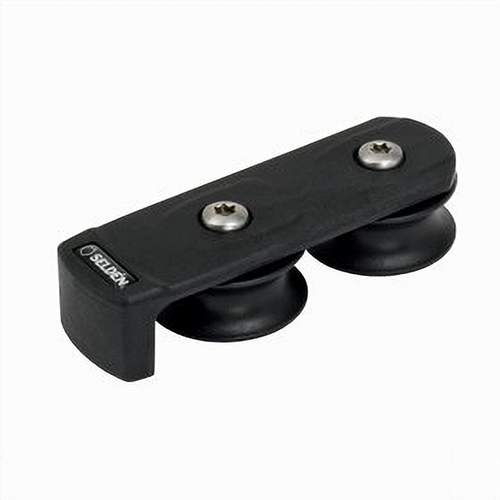

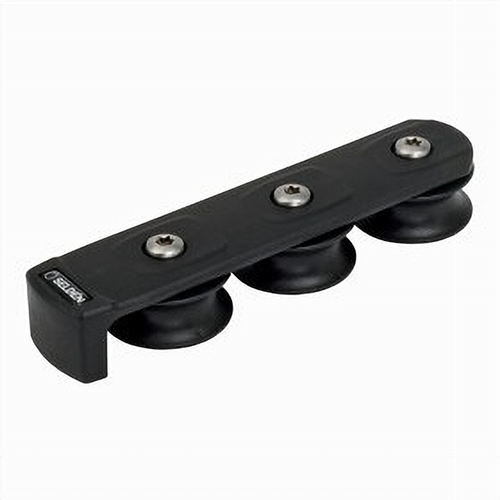
A good layout aims to achieve a clean lead with sensible turning angles, low unnecessary friction and adequate strength at every attachment point.
What does a deck organiser do?
A deck organiser groups several lines into separate sheaves so they can be redirected across the deck or coachroof. They are commonly used where halyards, reefing lines and other controls are led aft from the mast area.
Organisers are available with different numbers of sheaves, sheave diameters and load ratings. The number of lines alone is therefore not enough to select the correct unit.
Browse our deck organisers.
What is a fairlead?
A fairlead controls the position of a rope and helps maintain the intended lead through a particular area of the deck. Unlike a conventional block, many fairleads do not use a rotating sheave.
They are useful where only modest redirection is required or where a compact, fixed guide is appropriate. The permitted rope diameter and mounting arrangement still need to be checked.
Browse our sheet leads and fairleads.
Sheet leads and fixed rope guides
Sheet leads and related fixed fittings are designed to control the path of sheets or control lines. Different products can have very different load ratings and mounting dimensions, even when they look broadly similar.
When replacing an existing fitting, check hole spacing, fastener size, line diameter and manufacturer part number before drilling or reusing the original holes.
Plan the entire rope route
Start at the line's origin and follow it through every change of direction to the winch, clutch or cleat. Check that each fitting is aligned with the next one.
Poor alignment can cause the rope to rub against cheeks, deck fittings or neighbouring lines. It also creates additional friction, which becomes particularly noticeable on long halyards and heavily loaded controls.
Turning angle matters
A fitting that merely guides a line through a small change in direction may see a very different reaction load from one that turns the same loaded rope through a large angle.
This is one reason not to choose an organiser or fairlead solely by rope diameter. The expected load and the way the line changes direction also matter.
Check deck structure and fasteners
Loads from organisers and sheet leads are transferred into their mounting bolts and the structure beneath them. When changing a layout, make sure the deck or coachroof structure and any backing arrangement are suitable.
Do not assume that fitting a larger or higher-rated organiser automatically increases the capacity of the overall installation.
Keep service access in mind
Lines should be easy to inspect and replace, while organisers should remain accessible for cleaning and inspection. Check sheaves for free movement and look for wear where ropes enter and leave the fitting.
For the wider selection process, return to our Yacht Deck Hardware Guide.